Is Hydro Jetting Safe for Old Pipes?
Yes, Hydro Jetting is safe for most old pipes in Montebello when a camera inspection comes first. Here is how we protect cast iron, clay, and Orangeburg lines.
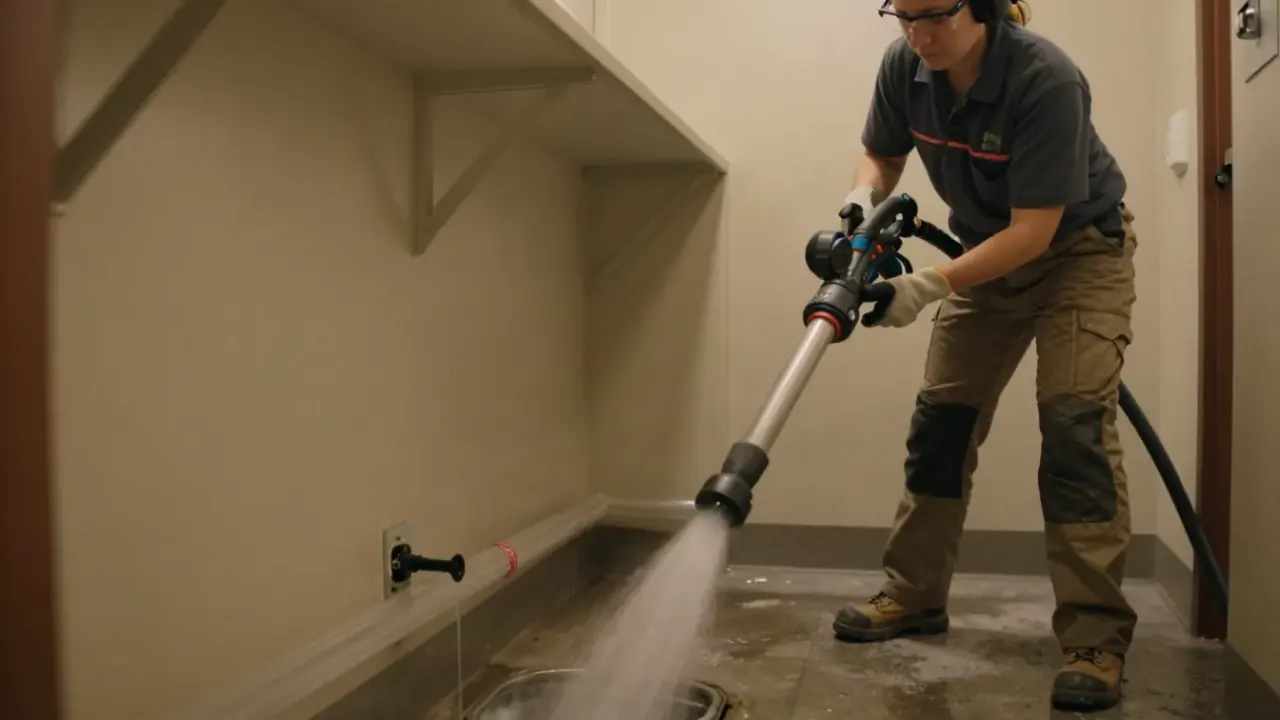
Is Hydro Jetting safe for old pipes in Montebello CA? Yes - for most pipes built before 1980, Hydro Jetting is safe when a camera inspection confirms the line is structurally sound and the technician dials pressure to match the pipe material. The risk is not the water; it is running 4,000 PSI through a line that already has a hairline crack or a root-split joint. Below we break down exactly which materials in Montebello handle jetting, which ones do not, and how we decide before the hose ever goes in.
The short answer: yes, with one condition
Hydro Jetting old pipes Montebello is a safe, standard practice for the vast majority of homes we service - the condition is a camera inspection first. Jetting scours the full inside diameter of the pipe with water at 1,500 to 4,000 PSI, which is why it clears grease, scale, and roots far better than a snake. A cable auger pokes a hole through the blockage. Jetting removes the blockage and the film that caused it.
On a 60-year-old cast iron lateral, that difference matters. We have cleared the same Montebello kitchen line three times with a snake before jetting it once and not hearing from the homeowner again for two years. The pipe was fine. The technique was the problem.
What we will not do is jet a line blind. If we cannot see the inside of the pipe, we do not know whether a 4,000 PSI stream is cleaning it or finishing it off.
Why Montebello's pipe inventory makes this question so common
Montebello has one of the oldest residential sewer inventories in the San Gabriel Valley, and that is why homeowners here ask about jetting safety more than almost anywhere else we work. A large share of the housing stock went up between 1920 and 1965, which means cast iron, vitrified clay, and Orangeburg - a tar-paper pipe used from roughly 1945 to 1972 - are all still in the ground under this city.
We see three distinct pipe generations depending on where you live. In Downtown Montebello, the blocks closest to Whittier Boulevard hold the oldest laterals, many original clay runs that have been root-penetrated for decades. Up in Montebello Hills, the 1950s and 60s tracts are mostly cast iron with the original hub joints. And in the newer pockets, you will find ABS plastic from the 1980s forward, which handles full pressure without complaint.
That mix is exactly why a single blanket answer does not work. Clay behaves differently from cast iron. Cast iron behaves differently from Orangeburg. And Orangeburg is the one material where we routinely tell people no.
Which pipe materials are safe for Hydro Jetting in Montebello?
Pipe material is the single biggest factor in whether safe Hydro Jetting for old pipes Montebello CA is possible, and the answer splits cleanly into three tiers. Here is how we sort it in the field.
Safe at full pressure
- ABS and PVC plastic - installed from the 1970s onward, rated for 4,000 PSI jetting without issue.
- Schedule 40 cast iron - sound pipe with intact walls handles 3,000 to 4,000 PSI. We still start lower and step up.
- Concrete and vitrified clay in good condition - clay is brittle but strong when the joints are intact. Camera first, always.
Safe at reduced pressure
- Older cast iron with visible scale or pitting - we run 1,500 to 2,000 PSI and use a rotating nozzle rather than a penetrating tip.
- Clay with offset joints or hairline cracks - low pressure, and we watch the camera the whole time.
- Long runs with multiple 90-degree bends - pressure drops naturally, so we compensate with nozzle choice, not more PSI.
Not safe - do not jet
- Orangeburg - tar-paper pipe that deforms under pressure. Jetting it is how you turn a slow drain into a collapsed line and a $9,000 excavation.
- Crushed, bellied, or root-split pipe - the camera shows it, and we stop.
- Any line already leaking into the soil - jetting accelerates the failure.
If you are not sure what is under your slab or lawn, that is normal. Most homeowners in Montebello have never seen their lateral. That is what the camera is for.
Can Hydro Jetting damage cast iron pipes?
Hydro Jetting cast iron pipes Montebello California homeowners ask about constantly - and the honest answer is that it can damage cast iron that is already failing, but it will not damage cast iron that is sound. The distinction is wall thickness and joint integrity, not age.
Cast iron fails from the inside out. Sewer gas and the hydrogen sulfide in it eat the top of the pipe first, which is why a 1955 lateral can look perfect from the yard and be paper-thin at the crown. A camera sees that. A snake does not. Neither does a homeowner staring at a slow drain.
When we jet cast iron, we follow a simple protocol: camera first, then start at 1,500 PSI, then step up in 500 PSI increments while watching the camera feed. If we see scale flaking off cleanly, we keep going. If we see the pipe wall flexing or debris that looks like rust flakes rather than grease, we stop and talk about options.
For heavily scaled cast iron, Pipe Descaling Montebello CA is often the better first step. Descaling removes the mineral buildup that narrows the pipe, then jetting maintains it. Doing it in that order adds years to a cast iron lateral that would otherwise need replacement.
Can Hydro Jetting damage old clay pipes in Montebello?
Can Hydro Jetting damage old clay pipes in Montebello? Only if the clay is already cracked, offset, or root-split - intact vitrified clay is one of the toughest materials in the ground and handles jetting well. Clay's weakness is at the joints, not the barrel. The pipe itself will outlive all of us. The mortar between sections is what fails.
Roots find those joints. A ficus or a Brazilian pepper tree 20 feet away will send roots into a clay joint and slowly pry it apart over a decade. By the time you notice the slow drain, the joint is usually already open.
That is why Tree Root Removal by Hydro Jetting Montebello CA is one of our most requested services in the older parts of the city. We run a root-cutting nozzle that slices roots at the pipe wall rather than pushing them through, then follow with a flushing pass to carry the cuttings out. On clay, we stay at 2,000 PSI or below and let the cutter do the work.
What we will not do is jet a clay line with a collapsed section. If the camera shows a belly or a broken barrel, jetting pushes water into the soil and makes the sinkhole worse.
How we set pressure for aging sewer lines
Safe water jetting for aging sewer lines in Montebello comes down to four variables we control on every job: pressure, nozzle type, water volume, and pull speed. Pressure is the one homeowners fixate on, but it is the least important of the four.
- Pressure - 1,500 PSI for fragile clay and scaled cast iron, 3,000 to 4,000 PSI for plastic and sound cast iron.
- Nozzle - a penetrating tip for hard blockages, a rotating chain cutter for roots, a flushing nozzle for grease and sand.
- Flow rate - 4 to 8 gallons per minute. Higher flow carries debris out; higher pressure just hits harder.
- Pull speed - we pull the hose back at a controlled rate so every foot of pipe gets the same cleaning, not just the first ten feet.
On a typical Montebello single-family lateral, 60 to 90 feet from the cleanout to the city main, the whole job runs 45 to 90 minutes. Typical 2026 pricing in this area lands between $350 and $650 for a residential line, depending on access, blockage severity, and whether root cutting is needed.
Should I get camera inspection before Hydro Jetting old pipes in Montebello CA?
Yes - a camera inspection before Hydro Jetting old pipes in Montebello CA is not optional on our jobs, and it is the single thing that separates a safe jetting job from a risky one. The camera costs $150 to $250 as a standalone service, and it tells us three things we cannot learn any other way.
First, it identifies the material. We have pulled up to houses where the homeowner swore the line was plastic and found 1948 clay. Second, it locates the blockage and tells us what it is - grease, roots, scale, or a foreign object. Third, it shows us the condition of the pipe behind the blockage, which is the part that actually determines whether jetting is safe.
We also run a camera after jetting. That post-jet pass confirms the line is clean wall-to-wall and catches anything the jetting disturbed. If we find a crack we did not know about, you find out from us the same day, with photos, not from a backup three weeks later.
Our Camera Inspection Before & After Jetting Montebello CA service is built around exactly this two-pass approach. It is the reason we can tell you with confidence that your old pipe came through the job intact.
What to watch out for
The most common mistakes we see with Hydro Jetting old pipes near me Montebello CA searches are not made by homeowners - they are made by whoever shows up with a jetter and no camera. Watch for these.
- Jetting without inspection. If a technician will not run a camera first, they cannot know whether your pipe is safe. That is the whole ballgame.
- Maximum pressure as a default. 4,000 PSI on a 1950s cast iron lateral with scale is not thorough, it is reckless. Pressure should match the pipe, not the schedule.
- Jetting Orangeburg. If your home was built between 1945 and 1972 and nobody has confirmed the material, assume Orangeburg until a camera says otherwise.
- Jetting a line with a known belly. A low spot in the pipe holds water. Jetting fills it and pushes debris into the soil. Camera first, always.
- No post-job camera. Without it, nobody knows whether the line is actually clean or whether something shifted.
One more: be skeptical of anyone who quotes a jetting price before seeing the line. A fair quote on an old Montebello lateral depends on material, length, and blockage type - none of which are knowable over the phone.
When to call a professional
Call us when a drain backs up twice in the same season, when you hear gurgling from a fixture you are not using, or when water comes up in a floor drain while you are running the washing machine. Those are all signs of a main line problem, not a fixture problem, and they get worse on their own.
We handle Sewer Line Hydro Jetting Montebello CA for residential laterals every week, and we start every job with a camera. If the line is safe to jet, we jet it. If it is not, we tell you what it needs instead - repair, spot lining, or replacement - and we do not run a jetter through a pipe that cannot take it.
If you run a restaurant or commercial kitchen, the math is different. Grease lines need jetting on a schedule, not on an emergency basis, and we build that schedule around your volume. Our Restaurant & Commercial Hydro Jetting Montebello CA work is planned around your service hours so you are not closing the kitchen for a cleaning.
Frequently Asked Questions
Is Hydro Jetting safe for old pipes in Montebello CA?
Yes, for most old pipes in Montebello, provided a camera inspection confirms the line is structurally sound. Cast iron, clay, and plastic all handle jetting at appropriate pressure. Orangeburg, crushed pipe, and lines with bellies do not. We inspect first, then set pressure to match the material.
Can Hydro Jetting damage cast iron pipes?
It can damage cast iron that is already failing - thin walls, cracked hubs, or heavy pitting. Sound cast iron handles 3,000 to 4,000 PSI without issue. We start at 1,500 PSI on older lines and step up while watching the camera, so we stop before any damage occurs.
What pipe materials are safe for Hydro Jetting in Montebello?
ABS and PVC plastic, Schedule 40 cast iron, and intact vitrified clay are all safe at appropriate pressure. Older cast iron and clay with offset joints are safe at reduced pressure, typically 1,500 to 2,000 PSI. Orangeburg, crushed pipe, and root-split clay are not safe to jet.
Should I get camera inspection before Hydro Jetting old pipes in Montebello CA?
Yes, always. A camera inspection runs $150 to $250 and identifies the pipe material, the blockage type, and the condition behind the blockage - the three things that determine whether jetting is safe. We also run a post-jet camera to confirm the line came through clean and intact.
How long does Hydro Jetting take on an old sewer line?
A typical Montebello residential lateral runs 60 to 90 feet, and the jetting itself takes 45 to 90 minutes. Add 20 to 30 minutes for the pre- and post-job camera passes. Root cutting on a heavily penetrated clay line can push the total to about two hours.
Get help with Hydro Jetting in Montebello
If your old line is backing up and you want to know whether it can take a jetting before anyone runs one, call us. We camera it, we tell you straight, and we jet it only if the pipe is safe.
Call Montebello Hydro Jetting at (323) 328-8521 to schedule a camera inspection and jetting on your aging sewer line.